The Troubles of Pit Foaming: A Feed-Based Mitigation Approach
By Corey Carpenter
Director of Business Development & Swine Technical Sales, DPI GLOBAL
Pit foaming events are complex, multifactorial issues that must be managed appropriately to avoid hazardous events like flash fires and explosions, which pose serious threats to farm laborers and animals. Swine barn fires have recently become a growing concern for industry stakeholders. While human and animal safety alone are enough cause for concern, the threat doesn’t stop there.
High ammonia levels that are not controlled properly can negatively impact respiratory function, reduce growth and lead to poor feed conversion. This reinforces the importance of well-managed pits, from all angles, to avoid putting animals and humans in hazards way while optimizing productivity.
What is Pit Foam?
Pit foam formation occurs when the strength of the surface tension in the liquid fraction becomes excessive enough to trap gases like ammonia (NH3), methane (CH4), hydrogen sulfide (H2S) and other sulfide and phenolic gases. These gases come from microorganisms that digest manure in anerobic conditions. Ideally, small amounts of these gases would escape through burst bubbles each day in a non-foaming manner which would help keep gas concentrations at a safe level. However, when these gases become trapped in bubbles within the pit, they form what is known as “pit foam”.
Bottom line – bubbles need to burst to release the gases in small quantities over time rather than build up in the form of pit foam.
Pit Foam: A Threat to Humans and Animals
Pit foam contains mostly methane and presents a unique challenge in swine barns (Iowa Pork Industry Center, 2026). While methane production is a natural step in the manure management process, it is flammable and can become a considerable safety hazard for humans and animals when poorly managed. Pit pumping and agitation, which mostly occurs in spring and fall, is one management practice that can contribute to the occurrence of fire events in swine barns. When foaming pits are pumped or agitated, they can suddenly release large amount of methane at once. From there, all it takes is a spark (pilot lights, lighters etc.) and oxygen, both supplied by the barn, to create an explosion or fire (Englin, 2026).
Managing Pit Foam
With springtime upon us, consideration should be given to key management strategies outlined in a recent article (Englin, 2026) that can help reduce pit foaming.
Key management strategies to help reduce pit foam formation:
- Dietary fiber level, particularly high levels of NDF
- Sufficient pit agitation
- Adequate solids removal
- Direct pit treatment (surfactants, ionophores, etc.)
When pit foam is present and must be agitated in some way without delay, it is recommended to increase ventilation speeds and eliminate ignition sources prior to agitation to reduce the potential for fires (Englin, 2026). After foaming pits have been agitated, ventilation rates of 30,000 cfm or more can return methane levels below explosive limits within approximately 15 minutes of ventilation (Englin, 2026). Producers should also consider feed-based approaches to limit the likelihood of pit foaming and associated fire risks.
Micro-Aid® – Here to Burst Your Bubbles
Micro-Aid is a DPI saponin solution that contains a phytogenic extract known to effectively reduce surface tension and limit pit foaming. It is important that gas bubbles have low surface tension so they can readily burst and release small amounts of gas over time, rather than form pit foam. Without Micro-Aid, surface tension is more likely to rise, increasing the potential for foam formation.
Impact on Microbial Activity and Gas Reduction
Additionally, it is important to consider the impacts of Mi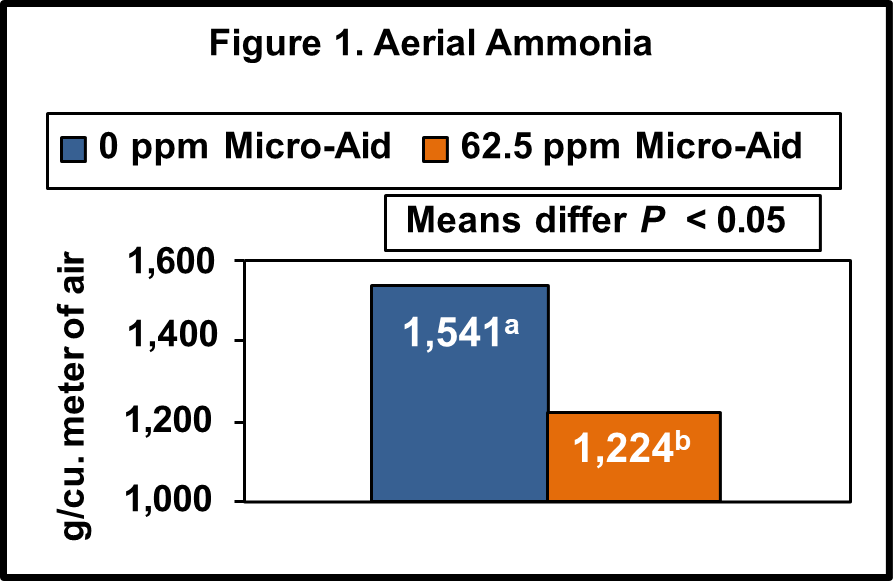 cro-Aid on the microbial population. Research suggests that provision of Micro-Aid to swine diets containing 20% DDGS increased organic nitrogen (microbial protein) by 44% due to improved microbial efficiency. In the same study, there was also a corresponding significant reduction in aerial ammonia (Figure 1).
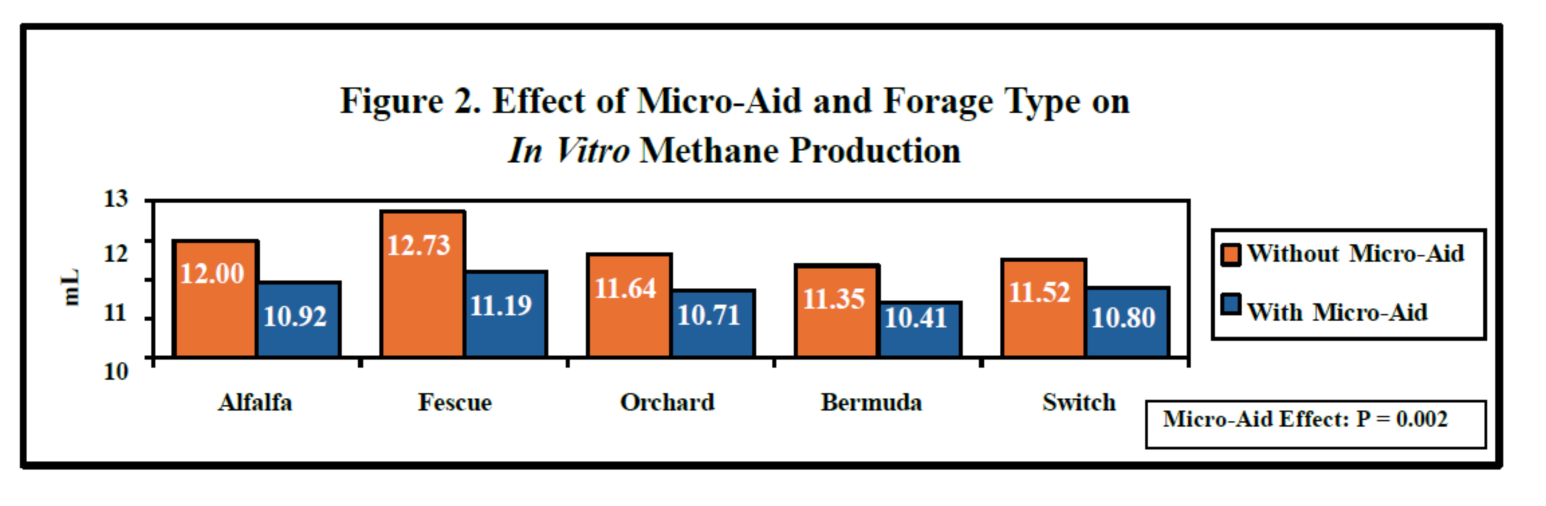
A reduction in methane and hydrogen sulfide would also be likely, as additional sulfur and carbon compounds would have been incorporated into the microbial protein. Micro-Aid research studies report a significant reduction (6 to 12%) in in vitro methane production in a diet that contained 10% forage and 90% concentrate across several forage types (Figure 2).
Additional research reports more than a 90% reduction in sulfur and phenol gas production in swine fed diets containing Micro-Aid.
These studies demonstrate the reductions in gas production occur because Micro-Aid improves the microbial community’s ability to more effectively utilize nutrients for microbial protein production.
What This Means in the Barn
Feeding Micro-Aid means using a tool backed by sound science and rigorous research to help limit gas build up and pit foam in your swine barn. These benefits extend far beyond growth and performance at the slat level, showcasing a strategic approach to improve barn safety for both animals and workers while optimizing overall productivity.
Micro-Aid®: More Than Animal Health and Performance
Micro-Aid works enterically to reduce gas production by improving microbial efficiency for greater microbial protein production, while also acting as a natural surfactant to reduce surface tension in the pit. Together, these factors directly impact the way pit formation occurs and affects animals and humans in the barn. Take advantage of a simple tool trusted for decades to enrich the environment and the lives of people and animals.
At DPI, partnerships are at the center of everything we do. With 60+ years of experience developing and implementing natural, phytogenic solutions, DPI is committed to helping producers create safer environments, healthier animals, and more efficient operations. To learn more about how DPI partners with producers to deliver trusted, high-quality solutions—and support long-term success—contact our experts or visit www.dpiglobal.com.
Meet the Author: Corey Carpenter
Director of Business Development & Swine Technical Sales, DPI GLOBAL
Corey is the Director of Business Development and Swine Technical Sales at DPI GLOBAL, where he leads and directs the swine business and development of new business opportunities that grow the impact of DPI’s products and solutions in many species across the globe. Through a trust centered and results driven approach, Corey helps guide customers to effective, profitable nutrition solutions that help them achieve their long-term business goals.
When Corey is not working with livestock producers he enjoys CrossFit, spending time with family around their animals, and cooking.
References
Englin, A. 2026. Pit foaming in swine barns: Fire risk and practical solutions. Iowa Pork Industry Center. Iowa Pork Industry Center. Available from: https://mailchi.mp/989e7488eff2/pit-foaming-17668471
Iowa Pork Industry Center. 2026. Foaming manure safety, science, and solutions with Dr. Dan Andersen [Video]. Available from: https://www.youtube.com/watch?v=nBYDSHxydig