Building on Piglet Potential: The Next Stage of Success
By Corey Carpenter
Director of Business Development & Swine Technical Sales, DPI GLOBAL
Continuing the Path to Success
Throughout our recent blogs, we’ve focused on the importance of preparing today for tomorrow’s challenges. From understanding why preparation matters to exploring practical approaches, we have discussed what actions nutritionists and producers can take to better position themselves, the pigs they feed, and the businesses they manage for success. This is particularly important now and over the next several months when producers are farrowing and weaning their most valuable pigs of the year.
In the previous post, we discussed the value of Micro-Aid® in supporting sow and litter performance. Now, we’ll explore how producers can build on that value by feeding Micro-Aid to pigs as they transition through arguably one of the toughest “seasons of life” they experience: the nursery phase.
Navigating the Nursery Transition
The nursery phase is one of the most critical transitions in a pig’s life. Weaning introduces several changes that can impact gut health, feed intake, and overall performance, including:
- Changes in diet
- New environments
- Social stress and regrouping
With the pigs digestive and immune systems still developing, it is important to consider what is being done to support them through these challenges, particularly during those initial days after weaning. The way pigs are supported early on can influence their growth and efficiency throughout the nursery period and beyond.
This means there is an opportunity for you to evaluate what else can be done to help pigs successfully navigate these difficult challenges!
Improving Nursery Pig Performance
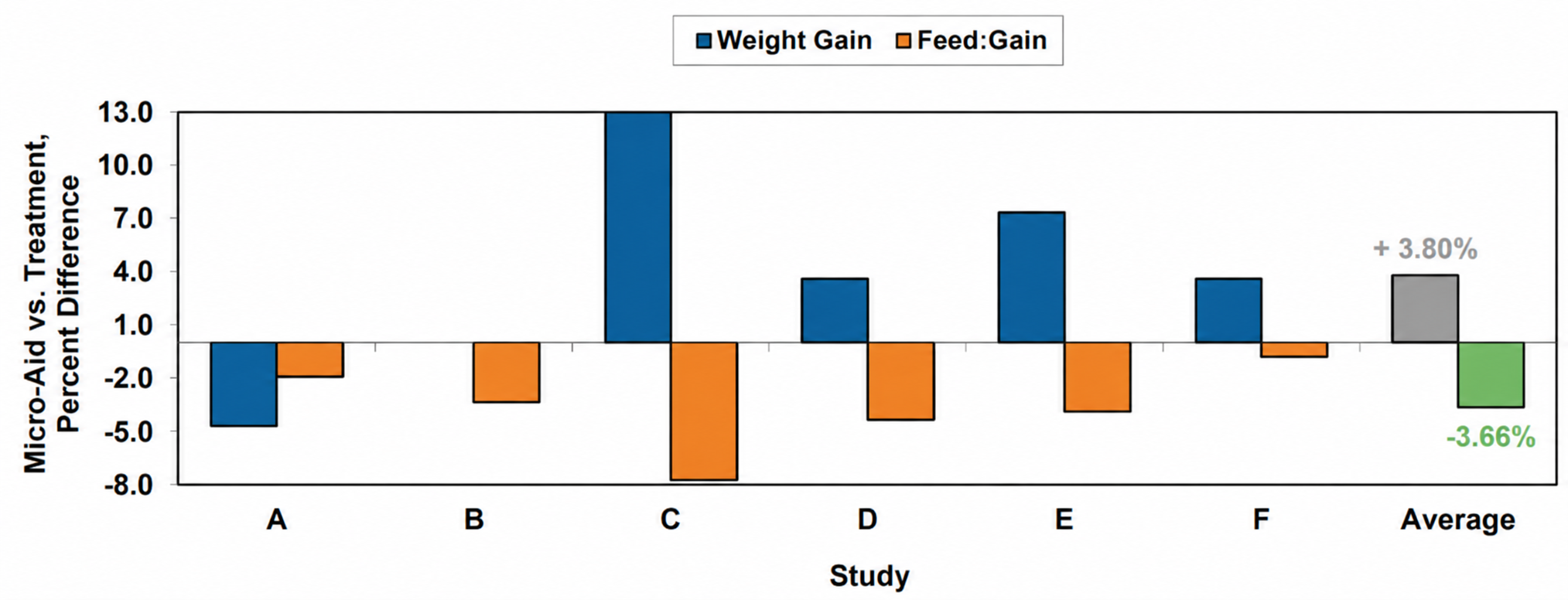
Research shows that feeding Micro-Aid to pigs throughout the nursery phase improves weight gain and feed efficiency under varying production conditions. A summary of studies demonstrated improvements of 3.8% in weight gain and 3.6% in feed efficiency (Figure 1) in nursery pigs fed Micro-Aid compared with those not fed Micro-Aid.
Supporting Gut Health
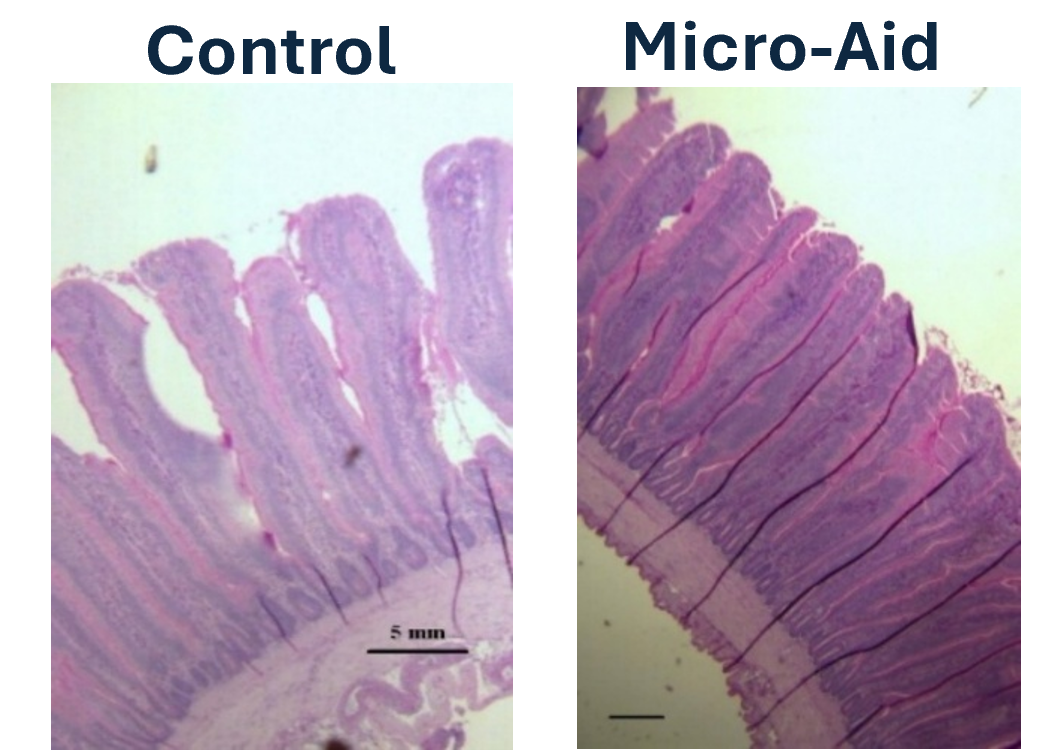
Micro-Aid supports nursery pig gut morphology through its bio-active components.
- Micro-Aid enhances the stability and activity of microbes along the gastrointestinal (GI) tract, while helping reduce ammonia buildup in the barn.
- The water- and fat-soluble components of Micro-Aid provide natural surfactant properties that help protect intestinal mucosal cells and act as a wetting agent for intestinal flora (Figure 2).
These bio-active properties are particularly helpful for nursery pigs because they help protect the pigs gut and immune systems through a time when they are still developing.
Make the Most of What’s Ahead
Placing nursery pigs over the next several months means preparing to support them in additional ways as seasonal conditions change, including:
- Providing supplemental heat to maintain appropriate temperatures.
- Keeping barns closed up to help retain heat during colder conditions.
- Managing ammonia levels that can build up with reduced ventilation and negatively impact pig health.
With these seasonal adjustments, consider the value of incorporating Micro-Aid to help reduce excess ammonia levels that can be harmful to pigs.
The Bottom Line
You will soon place nursery pigs that represent your greatest profit potential of the year when marketed, while also facing some of the most significant seasonal challenges pigs experience. As you work to fine-tune your nursery diets, take the time to evaluate what you are doing to give them the best start possible and how incorporating Micro-Aid may provide additional support as you set your most valuable pigs up for success throughout the nursery period!
Contact us or visit www.dpiglobal.com to learn more about the ways Micro-Aid can help you reach your goals!
Meet the Author: Corey Carpenter
Director of Business Development & Swine Technical Sales, DPI GLOBAL
Corey is the Director of Business Development and Swine Technical Sales at DPI GLOBAL, where he leads and directs the swine business and development of new business opportunities that grow the impact of DPI’s products and solutions in many species across the globe. Through a trust centered and results driven approach, Corey helps guide customers to effective, profitable nutrition solutions that help them achieve their long-term business goals.
When Corey is not working with livestock producers he enjoys CrossFit, spending time with family around their animals, and cooking.